
 Save to Pinterest
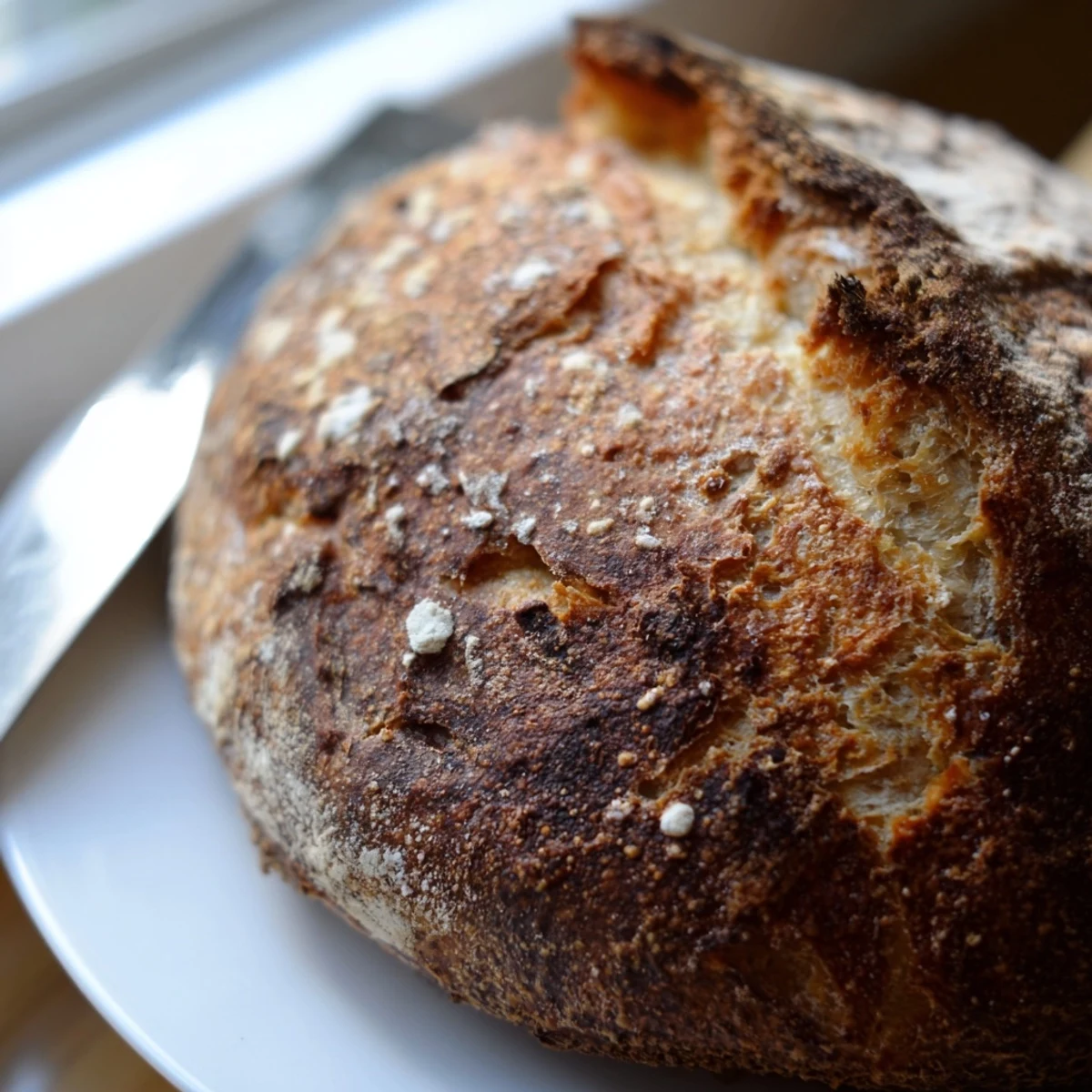
 Master the art of homemade crusty bread with this straightforward approach. The dough requires just four pantry staples—flour, salt, yeast, and water—combined in a single bowl. An overnight rest develops flavor and creates that signature airy texture, while a preheated Dutch oven delivers the professional-grade crackling crust home bakers crave. Minimal kneading means less work and more reward.
The smell of bread baking transforms a house into something else entirely. I learned this during a snowy February when my oven became the only thing that mattered. That first crackle when you tear into a fresh loaf still stops me in my tracks.
My sister called me at midnight once, panicked because her dough looked like a disaster. I told her to leave it alone and go to sleep. She texted me the next morning with a photo of the most beautiful rustic loaf, crust burnished and perfect.
Ingredients
- All purpose flour: The protein content gives structure while keeping the crumb tender and light
- Salt: Do not skip or reduce, it controls fermentation and deepens flavor
- Instant yeast: No proofing needed, it wakes up when mixed with warm water
- Lukewarm water: Think bath temperature, around body heat works perfectly every time
Instructions
- Mix the dough:
- Combine flour, salt, and yeast in a large bowl. Pour in warm water and stir until everything comes together into a rough, shaggy mass.
- Let it rest:
- Cover the bowl and walk away for 12 to 18 hours. The bubbles and rise will happen while you sleep.
- Shape the loaf:
- Turn the dough onto a floured surface and fold the edges toward the center to form a round.
- Second rise:
- Place on parchment paper, cover loosely, and rest for 30 to 45 minutes while the oven heats.
- Bake with steam:
- Lower the dough into a preheated Dutch oven, cover, and bake 30 minutes before uncovering for the final golden crust.
 Save to Pinterest
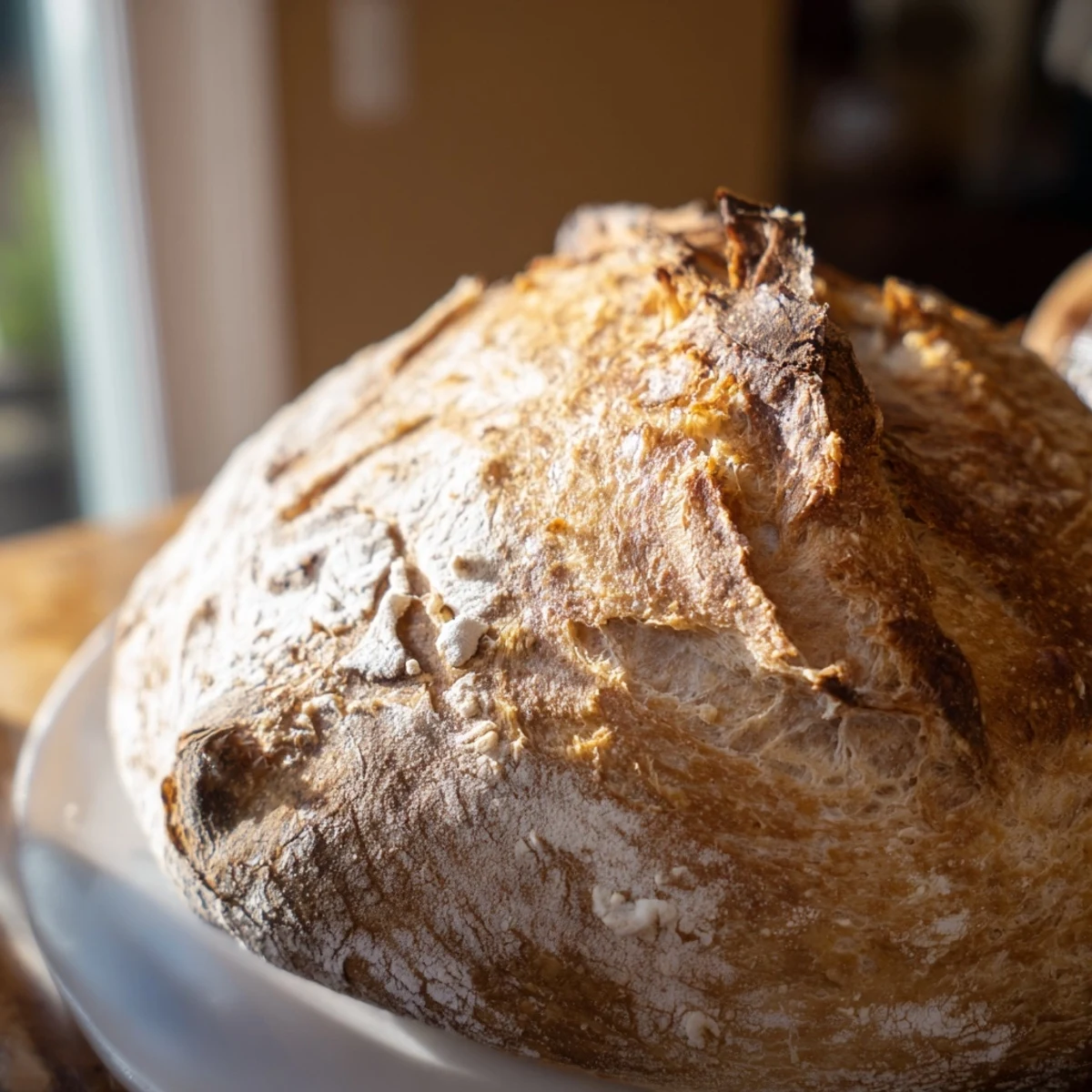
 Nothing beats slicing into that first warm loaf, butter melting into the crevices. My kids now request this bread for every special breakfast, and honestly, so do I.
Getting The Best Rise
Temperature matters more than you would expect. A too cool room means sluggish fermentation, while warmth speeds everything up. Find that sweet spot around 70 degrees.
Customizing Your Loaf
Once you have the basic method down, the variations become endless. Fold in chopped rosemary, roasted garlic cloves, or even handfuls of grated cheese.
Storage And Refreshing
This bread stays fresh for about two days stored in a paper bag at room temperature. Plastic creates a soft crust, while paper keeps it beautifully crackly.
- Revive a day old loaf in a 375 degree oven for 10 minutes
- Stale bread makes incredible croutons or breadcrumbs for later
- Slice and freeze extras for quick toast throughout the week
 Save to Pinterest
 There is something magical about turning flour and water into something that feeds people so completely. Every loaf feels like a small victory.
Your Recipe Questions
- → Why use a Dutch oven for baking?
-
The Dutch oven creates a steamy environment that promotes excellent oven spring and develops a crispy, crackling crust. The trapped moisture keeps the crust soft initially, allowing the bread to expand fully before hardening into that artisan-style golden exterior.
- → Can I reduce the rising time?
-
The long fermentation is essential for developing flavor and the bread's characteristic texture. Reducing rise time will result in a denser loaf with less complex taste. Plan ahead by mixing the dough the evening before you want to bake.
- → What if I don't have a Dutch oven?
-
A heavy cast iron pot with a tight-fitting lid works equally well. Alternatively, bake on a preheated baking stone or steel sheet, placing a metal pan of hot water on the rack below to create steam during the first 15 minutes of baking.
- → How do I know when the bread is done?
-
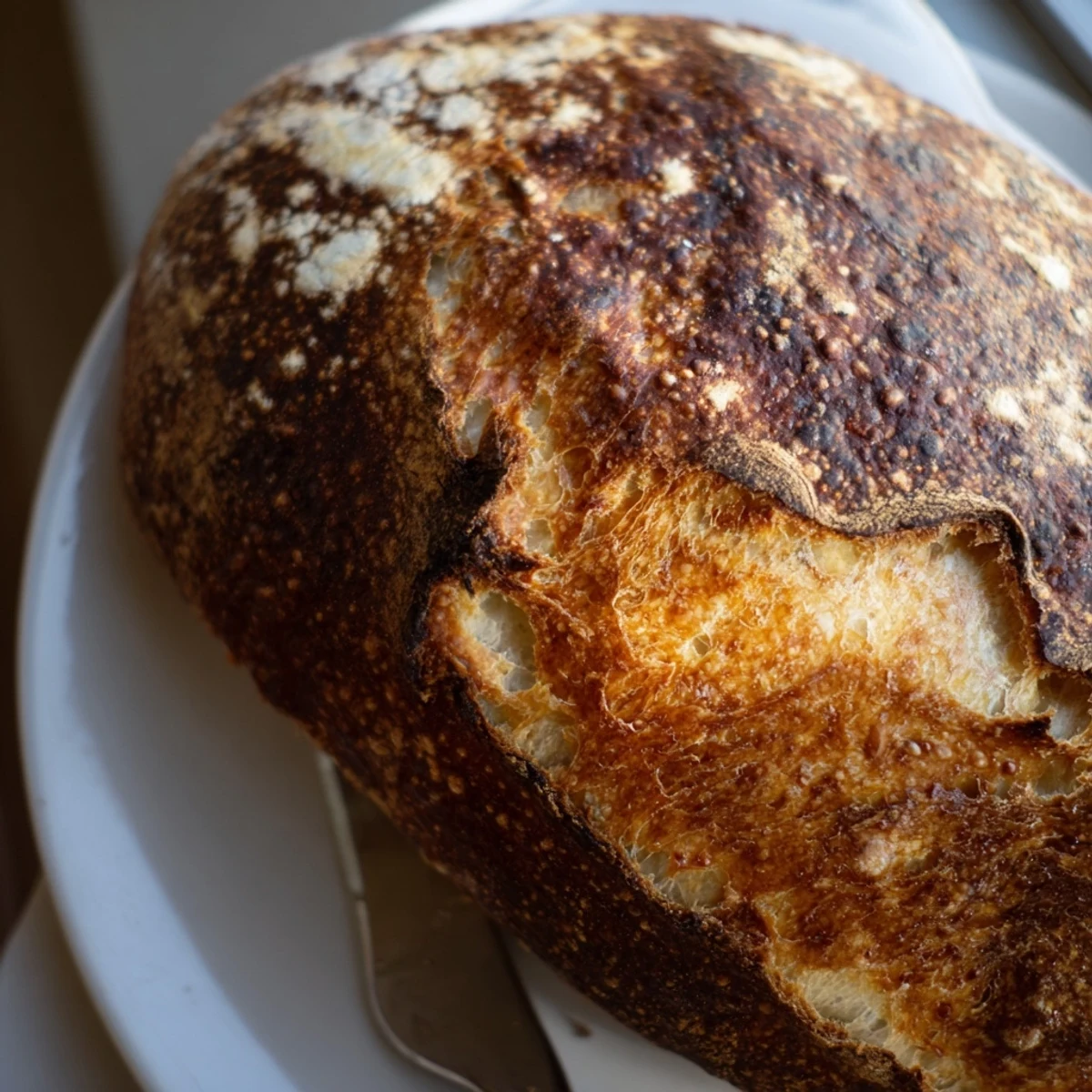
The crust should be deep golden brown, and the loaf should sound hollow when tapped on the bottom. An instant thermometer inserted into the center should read between 190-200°F. Allow the bread to cool completely before slicing for the best texture.
- → Can I add mix-ins like herbs or cheese?
-
Absolutely. Fold in herbs, garlic, olives, or cheese after the overnight rise, during the gentle shaping step. Keep additions to about 1/2 cup total to maintain the dough's structure and ensure proper rising.