
 Save to Pinterest
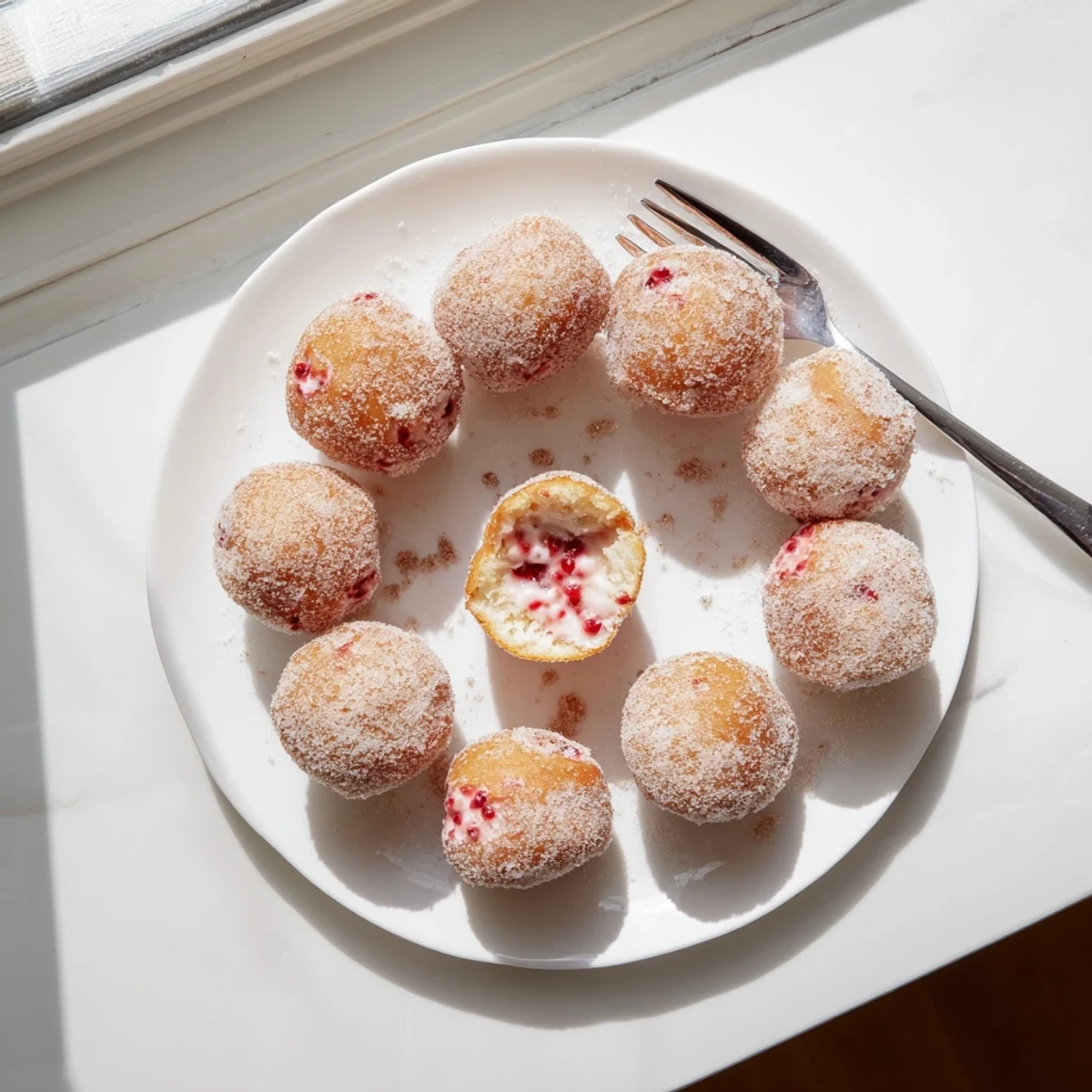
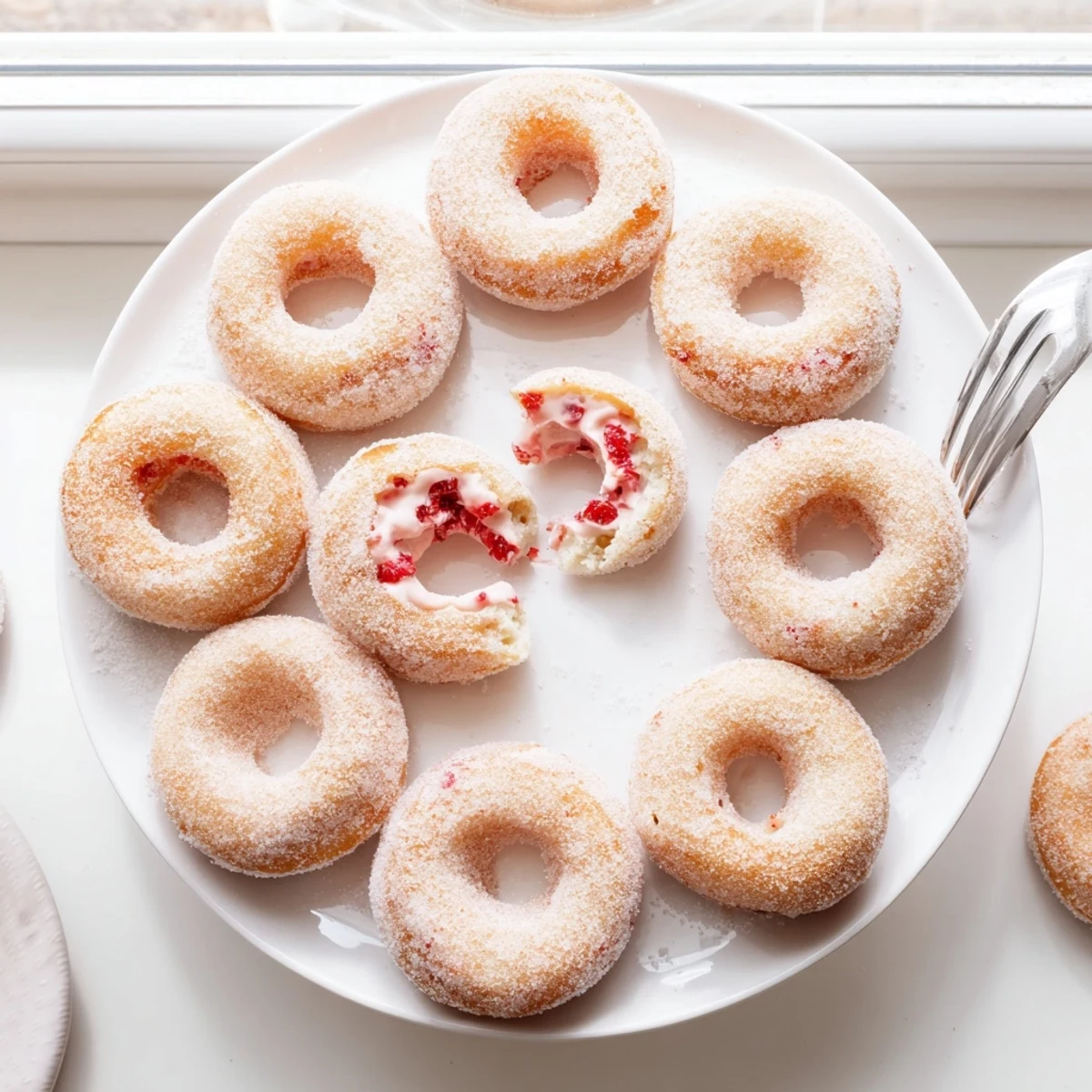
 Create bakery-style doughnuts at home with this comprehensive guide. These light, airy pastries feature a tender crumb and golden exterior, achieved through proper yeast activation and two-stage rising process. The star attraction is the fresh strawberry cream filling—a luscious combination of macerated berries, whipped heavy cream, and mascarpone cheese that creates the perfect balance of tangy and sweet.
The process involves mixing a enriched dough, allowing it to rise until doubled, then frying to golden perfection. While still warm, coat each piece in granulated sugar for that classic crunch. Once cooled, fill with the prepared strawberry cream using a piping bag for professional-looking results.
There was this tiny bakery downtown that made strawberry doughnuts every Sunday morning, and I'd bicycle across town just to smell them frying. The owner told me she woke at 4 AM to start the dough, laughing that good things can't be rushed. Years later, I realized she was teaching patience as much as pastry. Now my apartment fills with that same sweet fried aroma on weekend mornings.
My sister visited last spring and we spent an entire Sunday making these, flour dusting everything including the cat. We ate them warm on the fire escape, watching neighbors lean out their windows trying to identify what smelled so incredible. The filling dripped down our chins and she declared it better than that downtown bakery.
Ingredients
- All-purpose flour: The backbone that gives these doughnuts their pillowy structure, dont skip the proper measurement
- Active dry yeast: The magic worker that needs lukewarm milk to wake up and do its rising dance
- Whole milk: Creates richness and tenderness, must be warm like bathwater or yeast stays sleepy
- Unsalted butter: Adds flavor and soft texture, bring it to room temperature for even incorporation
- Fresh strawberries: The heart of the filling, diced small so they distribute evenly through the cream
- Heavy cream: Whipped into clouds that carry the strawberry essence through every bite
- Mascarpone cheese: The secret Italian touch that makes the filling taste like it came from a pastry case
Instructions
- Wake up the yeast:
- Whisk flour, sugar, yeast, and salt in a large bowl, then pour in the lukewarm milk, crack in the eggs, and add softened butter, mixing until everything comes together into a sticky, shaggy dough that clings to your fingers.
- Let the dough rest:
- Knead on a floured surface for 8 to 10 minutes until the dough transforms from sticky to smooth and elastic, then place it in a greased bowl, cover with a warm towel, and let it rise in a cozy corner until doubled, about an hour or so.
- Shape your doughnuts:
- Punch down the risen dough gently, roll it out to half an inch thick, and cut rounds with a three inch cutter, arranging them on parchment paper to rise again for 30 to 40 minutes until puffy and relaxed.
- Fry to golden perfection:
- Heat oil to 350 degrees Fahrenheit and fry the doughnuts in batches, about 1 to 2 minutes per side, until they turn deep golden brown, then drain on paper towels and roll them immediately in granulated sugar while still warm.
- Make the strawberry magic:
- Cook strawberries with sugar and lemon juice until softened and fragrant, then let them cool completely while you whip the heavy cream with powdered sugar and vanilla until stiff peaks form before folding in mascarpone and the cooled strawberries.
- Fill and serve:
- Cut a small slit in each cooled doughnut and pipe the strawberry cream generously inside, watching the filling plump up the center like a secret treasure.
 Save to Pinterest
 My neighbor smelled these frying and knocked on my door with a mug of coffee, saying her grandmother used to make something similar. We sat at my kitchen table picking sugar off our fingers, and she told me stories about her childhood kitchen while I filled the last doughnuts.
Getting The Rise Right
Dough needs warmth and patience, two things I'm often short on. I've learned to preheat my oven for exactly one minute, then turn it off and let the dough rise inside—this creates a perfectly cozy, draft free environment that yeast absolutely loves.
Frying Temperature Secrets
Too hot and the outside burns before the inside cooks, too cool and they turn into greasy sponges. I keep a thermometer clipped to the pot and never walk away, even for a second. The perfect 350 degree sweet spot produces doughnuts that are crisp outside, incredibly tender inside.
Making Them Ahead
You can fry and sugar coat these the night before, then fill them the next morning for maximum freshness. Store unfilled doughnuts in an airtight container and keep the filling chilled separately—it actually develops more flavor overnight.
- Bring doughnuts to room temperature before filling for easier piping
- The filling can be made a day ahead and kept covered in the refrigerator
- These never last longer than a few hours anyway, so timing hardly matters
 Save to Pinterest
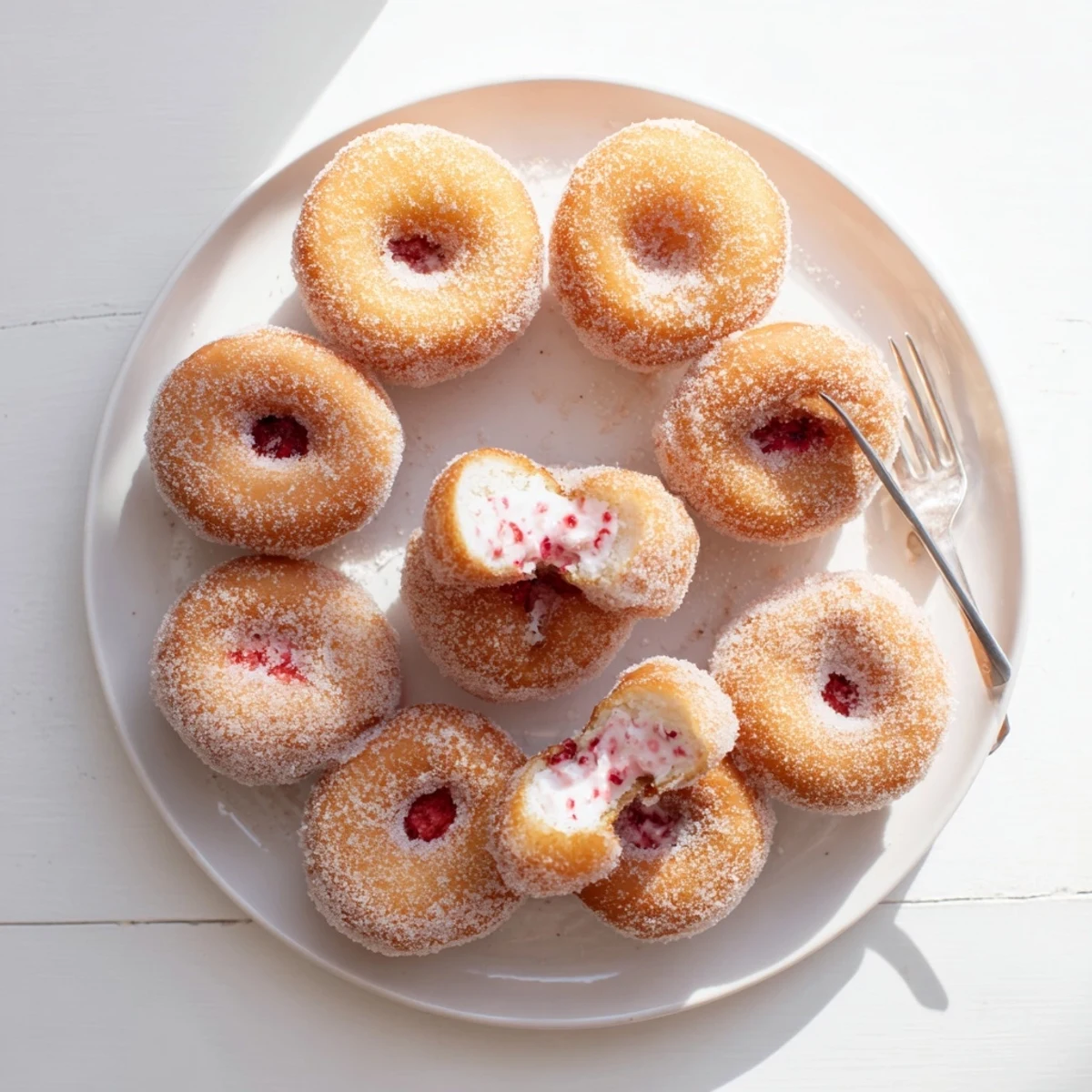
 There's something profoundly satisfying about biting into a doughnut you made yourself, the crisp sugar giving way to soft dough and that burst of strawberry cream. Maybe that's why I keep making them, long after the downtown bakery closed its doors.
Your Recipe Questions
- → Can I make the dough ahead of time?
-
Yes, prepare the dough and refrigerate after the first rise. Let it come to room temperature for 30 minutes before rolling and cutting.
- → What's the best oil temperature for frying?
-
Maintain oil at 350°F (175°C). Use a kitchen thermometer to ensure consistent results—too hot burns the exterior, too cool makes them greasy.
- → Can I bake instead of fry?
-
Baking produces a denser texture. If preferred, bake at 375°F (190°C) for 12-15 minutes, though the classic texture comes from frying.
- → How long do these stay fresh?
-
Best enjoyed within 24 hours. Store unfilled doughnuts in an airtight container and fill just before serving for optimal texture.
- → Can I use frozen strawberries?
-
Fresh berries work best, but thawed frozen strawberries drained well can substitute. Expect a slightly softer filling consistency.
- → Why did my doughnuts not rise properly?
-
Ensure yeast is fresh and milk is warm (110°F), not hot. Allow adequate rising time in a draft-free, warm spot for proper fermentation.