
 Save to Pinterest
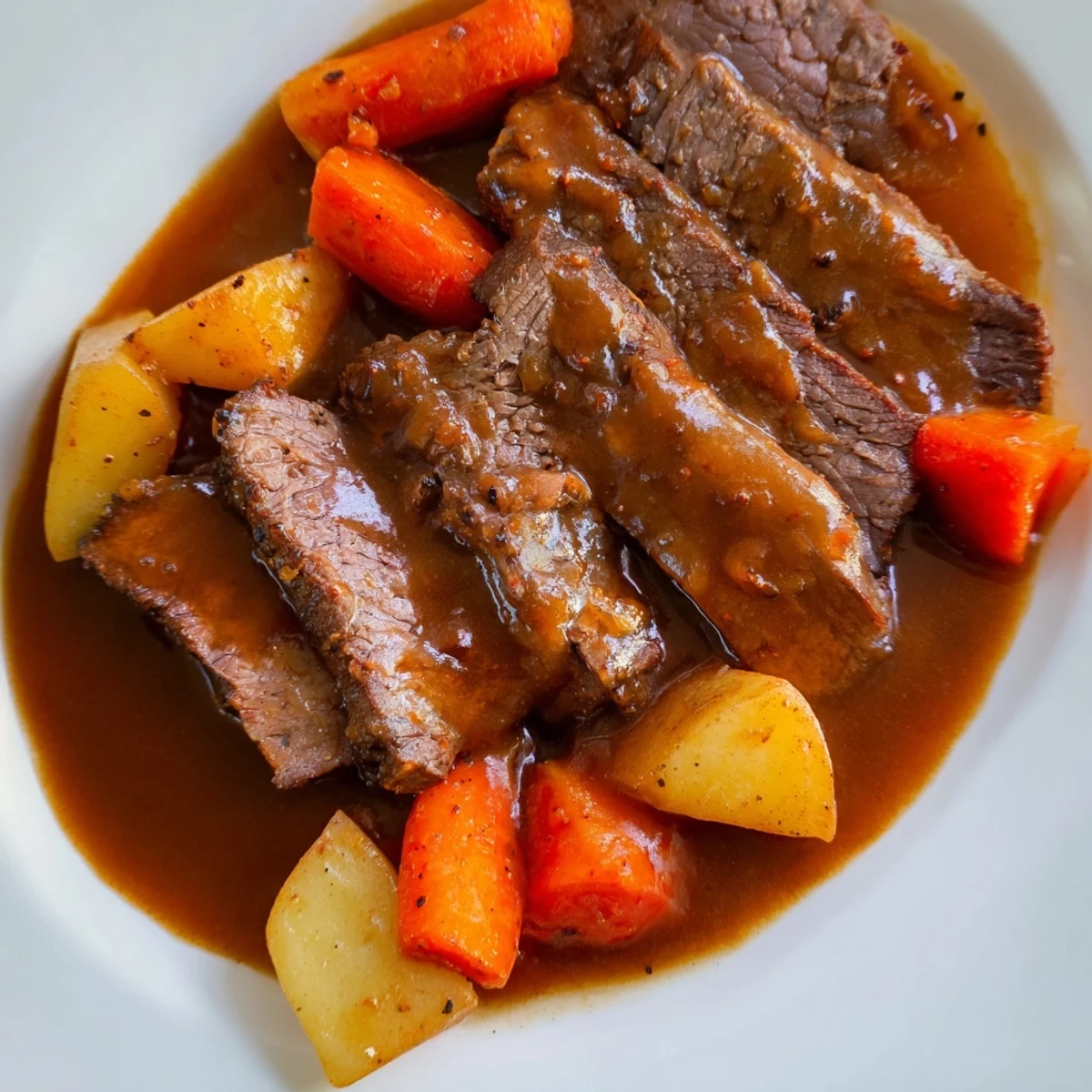
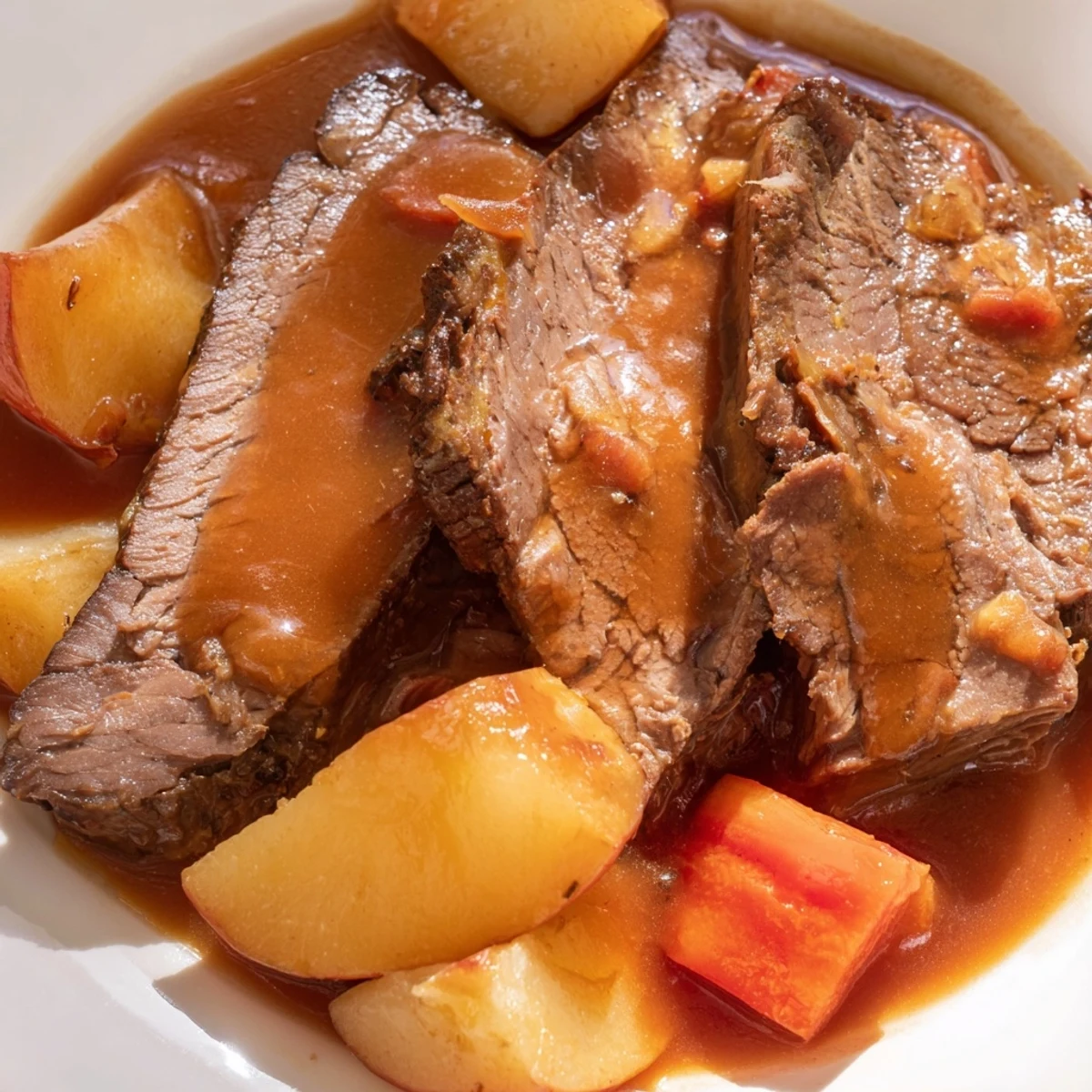
 This dish features beef chuck roast slow-cooked to tender perfection alongside hearty chunks of Yukon Gold potatoes, peeled carrots, and sliced onions. Garlic, thyme, rosemary, and bay leaves infuse deep flavor while tomato paste and Worcestershire sauce enrich the broth. Initial searing seals in juices, then the mixture simmers slowly, allowing meat and vegetables to meld beautifully. Optional cornstarch thickens the sauce for a luscious finish. A warming, gluten-free main course ideal for family gatherings.
There's something about the smell of a pot roast that fills a house with instant comfort. Years ago, I learned that the best version doesn't require fussing—just patience and a slow cooker. The first time I made this, I was skeptical that eight hours could yield anything special, but that first bite of fall-apart tender beef convinced me otherwise. Now it's my go-to when I want dinner to feel like a warm embrace.
I remember making this for a dinner party on a rainy Sunday when I thought I'd messed up the timing completely. I'd started the roast late, and my guests were arriving in six hours instead of eight. Panic set in until I realized I could bump the temperature up slightly and still deliver something spectacular. Everyone raved about it, and I learned that weeknight dinners and dinner parties don't need to follow different rules.
Ingredients
- Beef chuck roast (3 lbs): This cut has just enough marbling to stay moist after hours of cooking, and the collagen breaks down into gelatin that creates a naturally silky sauce without any cream.
- Kosher salt and black pepper: Don't skip the searing step—these season the surface when it hits the hot pan, building flavor before everything braises together.
- Olive oil (2 tbsp): High heat will be your friend here; make sure the pan is screaming hot before the roast hits it.
- Yukon Gold or red potatoes (1.5 lbs, cut into large chunks): These varieties hold their shape better than russets and don't turn to mush after eight hours.
- Carrots (4 large, cut into 2-inch pieces): Cut them slightly larger than you think you need—they shrink more than you'd expect.
- Yellow onion (1 large, sliced): This becomes almost caramelized as it cooks, adding natural sweetness to balance the savory beef.
- Beef broth (3 cups, low sodium): Low sodium is key because the liquid concentrates as it simmers, and you want to control the saltiness yourself.
- Tomato paste (2 tbsp): This adds depth and a subtle tang that keeps the broth from tasting one-dimensional.
- Worcestershire sauce (2 tbsp): It's umami in a bottle, and it's the secret ingredient most people can't quite identify but absolutely love.
- Garlic (4 cloves, minced): Add it raw to the liquid rather than cooking it first—slow cooking mellows it perfectly.
- Dried thyme and rosemary (2 tsp and 1 tsp): These herbs infuse everything with an earthy, aromatic quality that feels intentional and comforting.
- Bay leaves (2): They quietly anchor the flavor profile and should be removed before serving (I learned this the hard way once).
- Cornstarch and cold water (2 tbsp each, optional): Only use this if you prefer a thicker sauce; the cooking liquid is wonderful as-is.
Instructions
- Pat and season the roast:
- Use paper towels to dry the beef thoroughly—moisture is the enemy of browning. Season generously all over with salt and pepper, letting it sit while you heat the pan.
- Sear the beef:
- Get your skillet smoking hot, then place the roast down and don't move it. After 3-4 minutes, you'll hear a satisfying sizzle and see a deep golden crust forming; flip and repeat on all sides. This is where the magic happens.
- Arrange vegetables in the slow cooker:
- Place the seared roast in the center and nestle the potatoes, carrots, and onion around it. The beef will braise on top while the vegetables cook below, absorbing all the rendered juices.
- Make the braising liquid:
- Whisk together the broth, tomato paste, Worcestershire sauce, minced garlic, thyme, and rosemary in a bowl. Pour this over everything and tuck in the bay leaves.
- Cook on low:
- Cover and let it go for eight hours. You'll want to resist opening the lid more than once or twice—each peek lets steam escape and adds time to the cooking process. Trust the process.
- Finish and serve:
- Remove the bay leaves, transfer the beef to a cutting board, and shred or slice it into chunks. If you want a thicker sauce, mix cornstarch with cold water, stir it in, and cook on high for 10-15 minutes until the liquid coats the back of a spoon.
 Save to Pinterest
 There was a season when this pot roast became my answer to every challenge. A stressful week at work? I'd come home, spend fifteen minutes prepping, and let the slow cooker work its magic while I regained my footing. My partner would walk in hours later, and the look of relief that crossed their face told me everything—sometimes food is less about nourishment and more about permission to slow down.
The Art of the Perfect Sear
The sear is where your pot roast earns its reputation. A good crust requires patience and heat; rush it or use medium heat, and you'll end up with pale, steamed beef instead of caramelized, flavorful beef. The first time I botched this, I learned that you need a cast iron skillet or heavy stainless steel, not a non-stick pan that can't handle the temperature. Let the beef sit untouched for those first few minutes—fighting the urge to move it is harder than you'd think, but it's what creates that gorgeous brown exterior.
Vegetables That Belong Together
Carrots, potatoes, and onion aren't just supporting players in this dish—they're essential to the flavor story. The carrots add sweetness, the potatoes soak up every drop of braising liquid and become creamy without any cream involved, and the onion dissolves slightly into the sauce, thickening and enriching it naturally. I once tried substituting parsnips for all the carrots to be fancy, and while it was good, it tasted different in a way that made me miss the original. Stick with this trio, or if you want to experiment, swap just the carrots for parsnips and add a stalk of celery for aromatic depth.
Making It Your Own
This recipe is forgiving and flexible, which is part of its charm. Some cooks swear by adding a cup of dry red wine to the broth—it adds complexity and a subtle wine-forward note that feels a bit fancy without requiring extra steps. Others prefer keeping it simple, letting the beef and herbs shine. The optional cornstarch slurry is really only necessary if you like a sauce that clings thickly to the meat; plenty of people prefer the natural, pourable braising liquid.
- Add wine if you want complexity, or skip it for straightforward comfort.
- Leftovers taste even better the next day after the flavors have mingled overnight in the fridge.
- This freezes beautifully, so consider doubling the recipe and saving half for a future dinner.
 Save to Pinterest
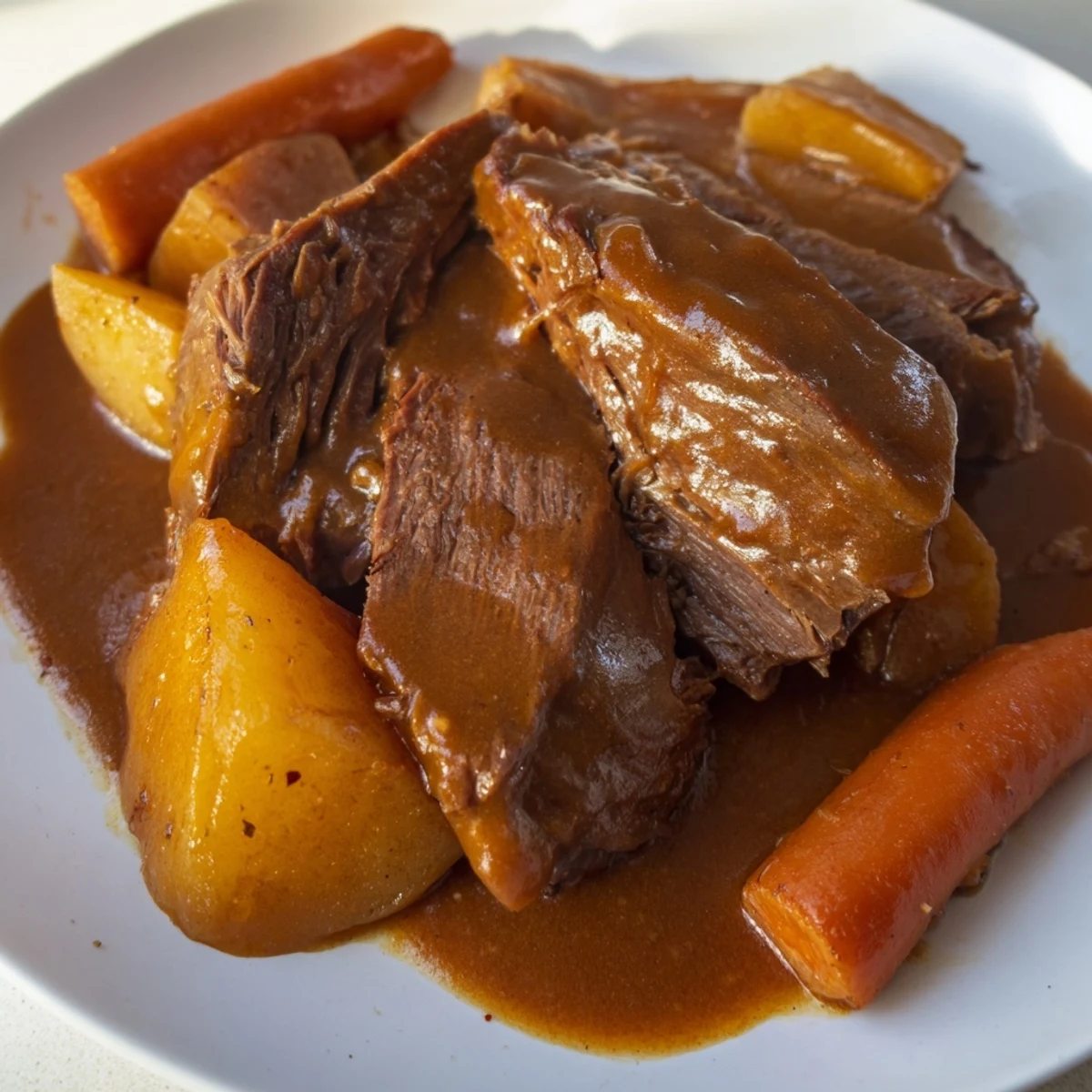
 This pot roast is the kind of meal that reminds you why you love to cook. It's uncomplicated, deeply satisfying, and it fills your home with the kind of smell that makes people happy the moment they walk through the door.
Your Recipe Questions
- → What cut of beef is best for this dish?
-
Beef chuck roast is ideal due to its marbling and toughness, which breaks down into tender, flavorful meat during slow cooking.
- → Can I substitute vegetables in this dish?
-
Yes, parsnips can replace carrots or celery can be added for different textures and flavors.
- → How do I thicken the sauce after cooking?
-
Mix two tablespoons each of cornstarch and cold water to form a slurry, then stir into the slow cooker and cook on high for 10–15 minutes.
- → Is searing the beef necessary?
-
Searing seals the meat's juices and adds a rich, caramelized flavor, enhancing the overall taste of the dish.
- → Can this dish be prepared ahead of time?
-
Yes, leftovers keep well refrigerated for up to three days and flavors often improve after resting.