
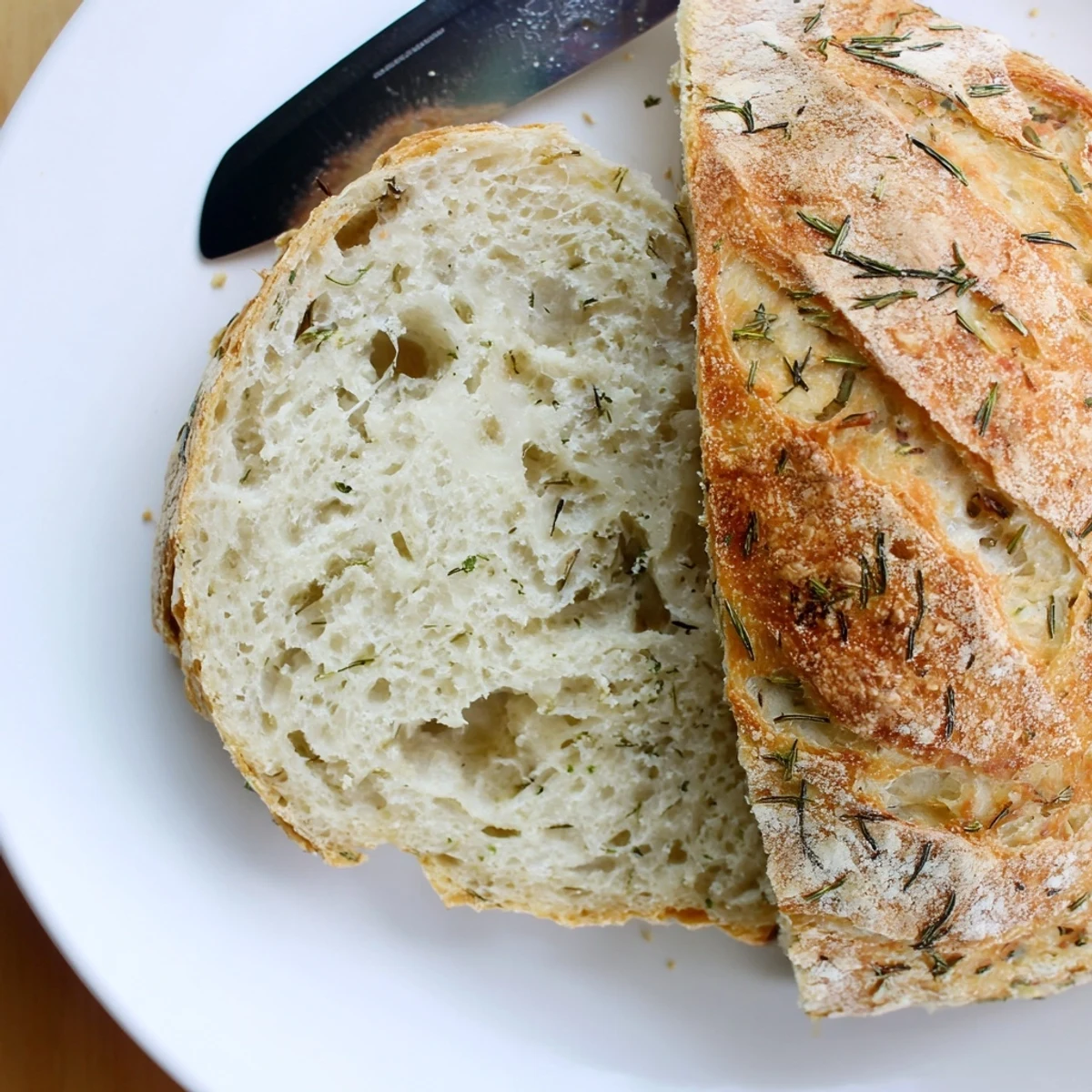
 Save to Pinterest
 This artisan-style bread combines the aromatic brightness of fresh dill with rich, creamy Gouda cheese for a deeply flavorful loaf. The no-knead technique requires just 15 minutes of active prep, relying on a long fermentation to develop complex flavors and structure naturally.
Baked in a Dutch oven, the loaf develops a professional bakery-quality crust—crisp, golden, and deeply caramelized—while maintaining a tender, airy interior studded with melted cheese pockets throughout.
Perfect for alongside hearty soups, building robust sandwiches, or simply enjoyed warm with herbed butter. The overnight rise makes this ideal for preparing ahead, with fresh bread ready to bake whenever you need it.
That first whiff of dill and melting Gouda wafting through my tiny apartment made me realize bread didn't need to be complicated to be extraordinary. I'd been intimidated by artisan baking for years, convinced anything with such a gorgeous crust required secret knowledge or hours of kneading I didn't have time for. Then a friend texted me about this no knead situation she'd discovered, and honestly? My skepticism vanished the moment I pulled that first golden loaf from the oven.
I made this bread on a rainy Sunday when I had zero motivation for anything involving real effort. My partner walked in from the grocery store to find me grinning at a bowl of sticky, bubbling dough like I'd accomplished something magical. We tore into it while it was still too warm, burning our fingers and not even caring, because that first bite of crisp crust giving way to tender, cheesy interior was absolute perfection.
Ingredients
- Bread flour: The higher protein content gives this bread structure and that satisfying chew you want in an artisan loaf
- Salt: Don't skimp here, it's what balances the rich cheese and bright dill
- Instant yeast: No need to proof it separately, just mix it right in with the dry ingredients
- Gouda cheese: Grate it yourself rather than buying pre shredded for better melting and flavor
- Fresh dill: Those delicate fronds release their aromatic oils beautifully in the long fermentation
- Black pepper: Just enough to add a gentle warmth that plays nicely with the herbs
- Lukewarm water: Think bathwater temperature, about 100°F, to wake up the yeast without killing it
Instructions
- Mix the base:
- Combine your flour, salt, and yeast in a large bowl, then stir in the grated Gouda, chopped dill, and pepper until everything looks evenly distributed
- Bring it together:
- Pour in the lukewarm water and stir with your spatula until you have a shaggy, sticky mess that doesn't look anything like bread dough yet
- Let it work:
- Cover the bowl tightly and walk away for 12 to 18 hours, letting time do all the work of developing flavor and structure
- Shape it gently:
- Turn your bubbly dough onto a floured surface and fold the edges toward the center to create a round, being careful not to deflate all those gorgeous air pockets
- Second rise:
- Set the loaf seam side down on parchment, cover loosely with a towel, and let it puff up for 30 to 60 minutes while your oven heats
- Get it hot:
- Place your Dutch oven in the oven and crank it to 450°F, letting everything get screaming hot for at least 30 minutes
- Bake covered:
- Transfer the dough into the preheated pot, score the top, and bake with the lid on for 30 minutes to trap steam
- Finish it:
- Remove the lid and bake another 15 to 20 minutes until the crust turns deep golden brown and sounds hollow when tapped
- Patience pays:
- Let the bread cool on a wire rack for at least an hour, because cutting into it too early makes the texture gummy
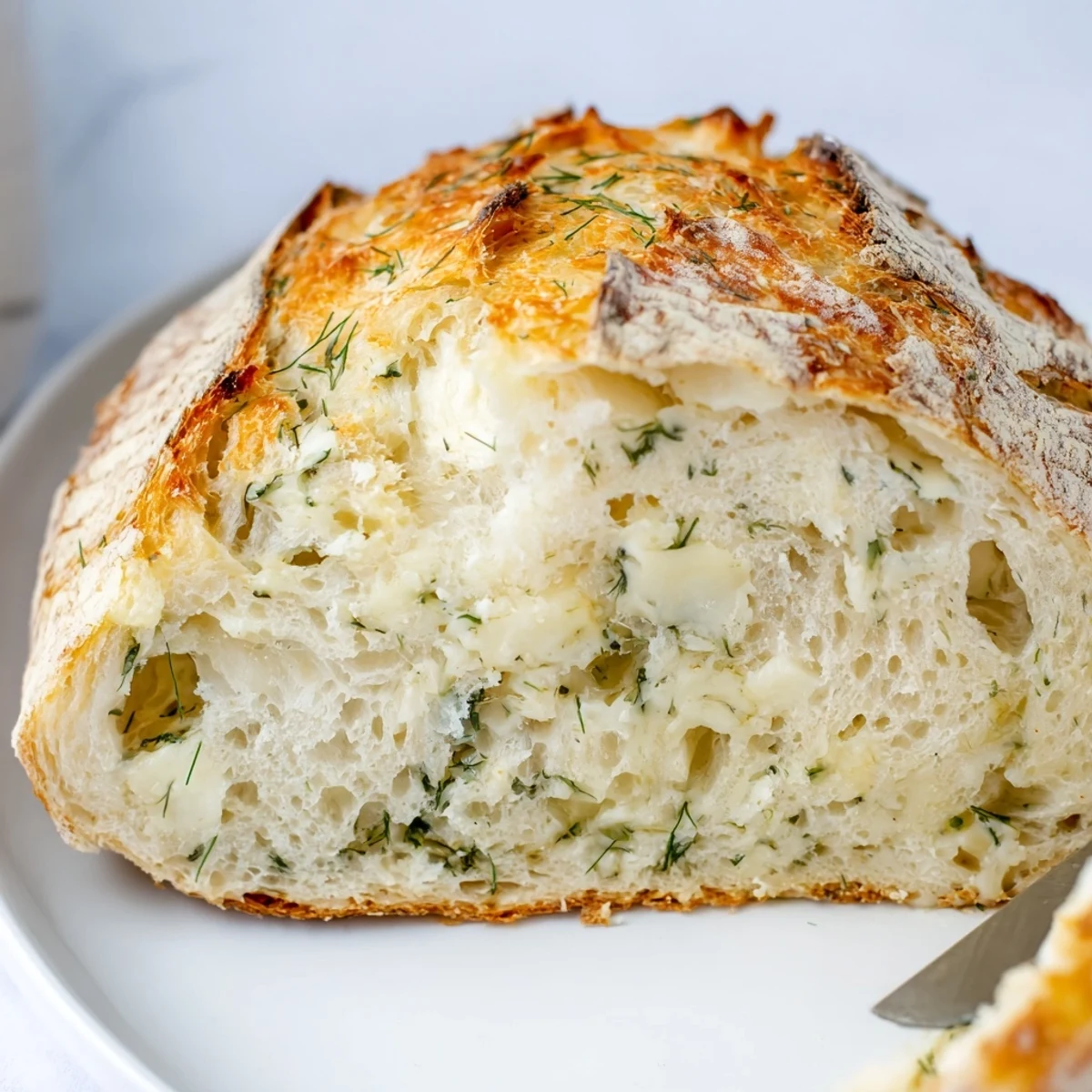 Save to Pinterest
 This bread has become my go to when I need to bring something impressive to a dinner party but want to spend actual time with my friends instead of hovering over the stove. Last summer I brought a still warm loaf to a potluck, and I swear I watched three different people's eyes widen at that first crackle of the crust. Now it's the most requested item at every gathering, and I'm happy to oblige since it makes me look like a baking wizard with practically zero effort.
Cheese Variations That Work
I've discovered that aged cheddar creates an even sharper bite, while Emmental melts into those gorgeous pockets throughout the crumb. The key is choosing something with enough personality to stand up to the dill without completely taking over the show. Smoked Gouda adds another layer entirely, turning this into something that feels almost meaty despite being completely vegetarian.
Timing Your Bake
The overnight rise is actually brilliant because you can mix the dough before bed and wake up to something that's practically ready to bake. I've started timing it so the bread comes out of the oven right around dinner time, filling the whole house with that incredible dill and cheese aroma. Just remember that the longer fermentation creates better flavor, so try to give it the full 12 to 18 hours if you possibly can.
Serving Suggestions
This bread is hearty enough to stand up to a rich tomato soup but delicate enough to serve alongside a simple green salad. I love it toasted for breakfast with a smear of herb butter or as the foundation for an open faced sandwich with smoked salmon and cream cheese. The leftovers make phenomenal croutons or bread pudding if somehow you manage to have any left after day one.
- Try rubbing the crust with a cut garlic clove while it's still warm for extra aromatics
- Store cut side down on a cutting board rather than wrapping it tightly
- Revive day old bread with a quick sprinkle of water and 10 minutes in a 350°F oven
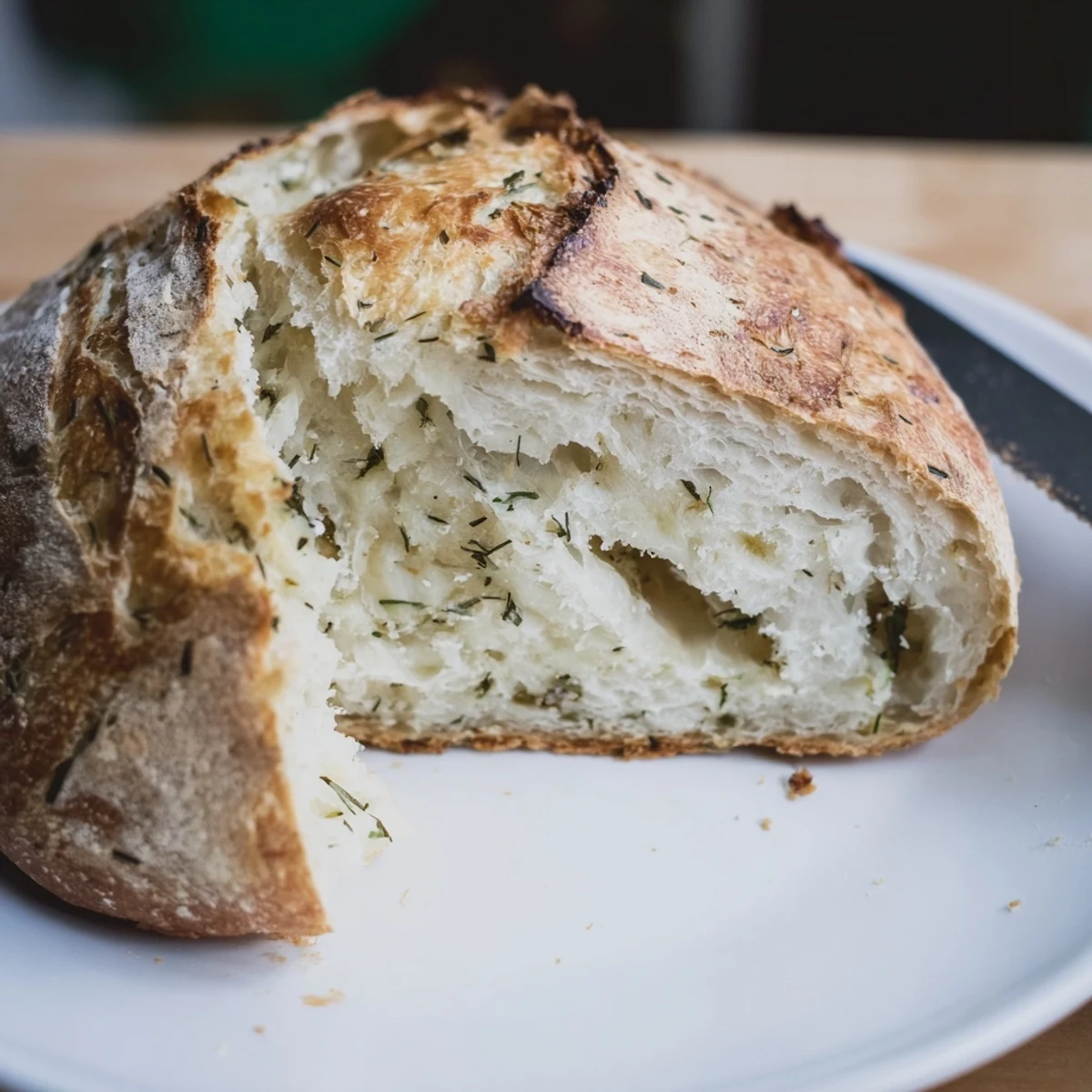 Save to Pinterest
 There's something deeply satisfying about pulling a loaf this beautiful from your oven with nothing more than a bowl and a spoon as your tools. It's bread that reminds you that sometimes the best things really are the simplest ones.
Your Recipe Questions
- → Can I use dried dill instead of fresh?
-
Yes, substitute 1 tablespoon of dried dill for the 3 tablespoons of fresh dill called for in the recipe. The flavor will be slightly more concentrated, so you may want to start with a smaller amount and adjust to taste.
- → What cheeses work best as Gouda substitutes?
-
Cheddar offers a sharper flavor profile, while Emmental provides a milder, nuttier taste with excellent melting properties. Other aged cheeses like Gruyère or aged Provolone also work beautifully in this dough.
- → Why must the Dutch oven preheat for 30 minutes?
-
Preheating the Dutch oven ensures the vessel absorbs maximum heat, creating the intense steam and temperature needed for proper oven spring. This trapped moisture is essential for developing that signature crackling, golden crust.
- → Can I reduce the rising time?
-
The 12–18 hour fermentation is crucial for flavor development and texture. Shortening this time will result in less complex flavor and denser crumb. Plan ahead and allow the full rising time for best results.
- → How do I store this bread?
-
Store at room temperature in a paper bag or loosely wrapped in a clean towel for up to 2 days. For longer storage, slice and freeze in an airtight container—toast individual slices directly from frozen for freshness.
- → Can I make this without a Dutch oven?
-
While a Dutch oven creates the ideal environment, you can bake on a preheated baking stone or sheet pan. Create steam by placing a tray of ice cubes on the bottom rack when you put the loaf in the oven.